“It’s Baked In”: University of Cincinnati Administrator Recorded Discussing DEI After Testifying Against State Ban
February 23, 2026
Ohio is among several states that have enacted restrictions on Diversity, Equity, and Inclusion (DEI) initiatives in higher education. In 2025, the Ohio Senate Higher Education Committee passed Senate Bill 1, prohibiting the teaching of DEI in university programs. These restrictions are in addition to the Executive Orders by President Trump banning DEI at the federal level.
A year ago, Katherine Jones, Undergraduate Program Director of Sociology at the University of Cincinnati and a Professor of Game Design, testified before lawmakers in opposition to SB 1. At that time, she argued that the bill would disadvantage the state’s graduates on the job market. She cited expectations from major employers such as Warner Bros. Games, where she had worked as a gender equity trainer, that graduates would be trained in DEI
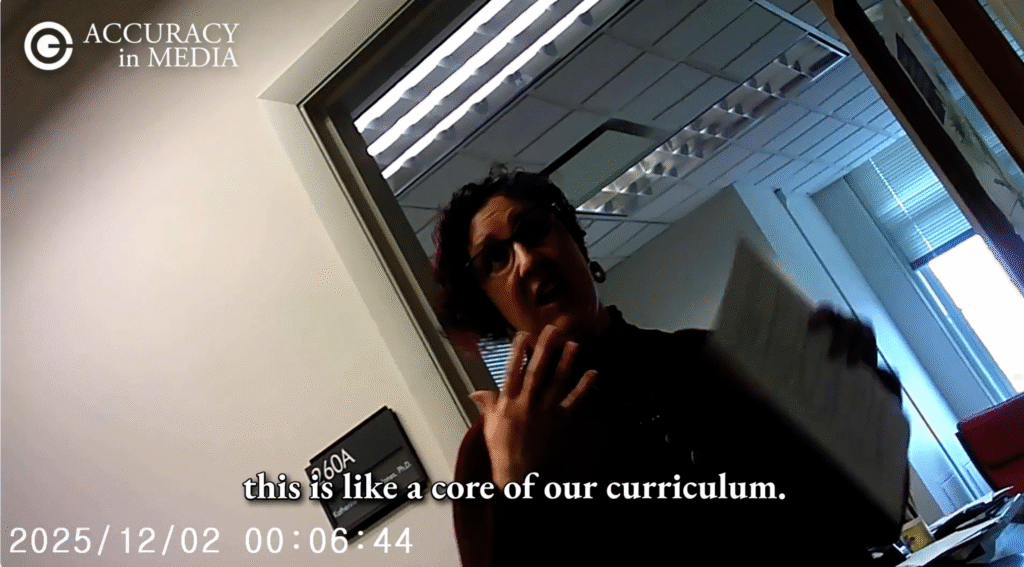
Months later, Jones was recorded on camera by an Accuracy in Media investigator she believed to be a prospective parent. When the investigator asked whether DEI concepts would still be taught to her son, Jones responded: “Yes. And he will [be taught DEI]. So again, in the Sociology Department this is like a core of our curriculum. I mean, we can’t really strip it out. It’s baked into what we talk about and what we teach.”
Jones repeatedly assured the investigator that little had changed following the law’s passage. She explained that topics commonly associated with DEI remain present throughout coursework.
“In pretty much all of our classes there is a discussion and a critical analysis of race, class, gender, sexuality, intersectionality — all of that,” she said.
When later approached by Accuracy in Media President Adam Guillette, Jones described the material differently, saying the department teaches standard sociological content rather than DEI as defined in law.
“We teach the most current sociological information and that’s not going to fall under DEI necessarily as defined,” she said.
She acknowledged a general education designation tied to DEI had been removed but maintained that administrators had told faculty the law would not impede what she called “academic freedom.”
“The administration has said over and over again this is not to impact our curriculum… We are still teaching the same things we have always taught and we are prioritizing those types of analyses.”
Asked what curriculum changes her department had made after the law passed, Jones claimed that changes had occurred but did not identify any specifics.
“I mean questions of equity and diversity, discussions of inclusion — not DEI technically as a concept,” she added.
Another University of Cincinnati professor, Steve Carlton-Ford, appeared on camera and said the core of their curriculum addresses social inequalities but does not promote anything prohibited by law.
When Guillette asked how the attorney general might view DEI as being “baked in,” Jones stood by her position. Stating that she had participated in the implementation task force, she claimed the department was operating within the law. When pressed again to identify specific changes made after the passing of Senate Bill 1, she ended the conversation.
“I think this conversation is over.”
Our investigations clearly show that faculty and administrators in Ohio’s public universities are continuing to teach and promote DEI in defiance of state and federal law. They may have made some cosmetic changes to placate legislators — but behind closed doors, it’s business as usual.
Take action now by visiting DEIinOhio.com to send a message to the university’s trustees and the attorney general. No Ohio taxpayer should be forced to fund illegal DEI education promoted by its own administrators.