Columbia Spectator Amplifies AIM’s Activism Against Their Leading Antisemites
April 5, 2026
The Law School hosted a panel Wednesday focused on threats to free expression under President Donald Trump’s second administration, with censorship extending to universities, law firms, media institutions, and online speech.
The panel, titled “First Amendment rights Under Authoritarianism,” featured Jamal Greene, the Dwight professor of law; David Pozen, the Charles Keller Beekman professor of law; Ramya Krishnan, Knight First Amendment Institute senior staff attorney; and Emerson Sykes, American Civil Liberties Union senior staff attorney. Speakers repeatedly returned to the idea that while courts remain one site of resistance, litigation alone cannot sustain a democratic free speech culture.
The Wednesday panel is one of many this week addressing free speech issues. On Monday, Barnard held a “Know Your First Amendment Rights” workshop, also featuring Skyes, which discussed how free speech relates to education and how institutions can uphold their commitments to civil rights protections.
Krishnan opened the Wednesday discussion by describing the current moment as “grim,” pointing to what she called a “veritable avalanche” of attacks on free speech and academic freedom.
“The administration has made no burdens about the fact that it is willing to retaliate against its political enemies based on speech,” Krishnan said.
While Krishnan said some recent district court rulings had been pleasant, she cautioned against relying too heavily on courts to preserve democratic values, arguing that civic institutions “have failed to step up in the kinds of ways that we need.”
Pozen drew a distinction between direct repression on college campuses and more subtle forms of chilling. At Columbia, he said, protest has been “very significantly curtailed” by the University administration, while traditional academic speech remains resilient.
He said a recent survey of instructors conducted by the provost’s advisory committee on academic freedom, which he cochairs, found that Columbia professors had not been explicitly told to remove books or avoid certain classroom topics, but many reported “self-censorship.”
“People are afraid to take on certain topics or even teach certain classes for fear of being, usually, doxxed or accused of discrimination formally or informally,” Pozen said. “That’s a big problem.”
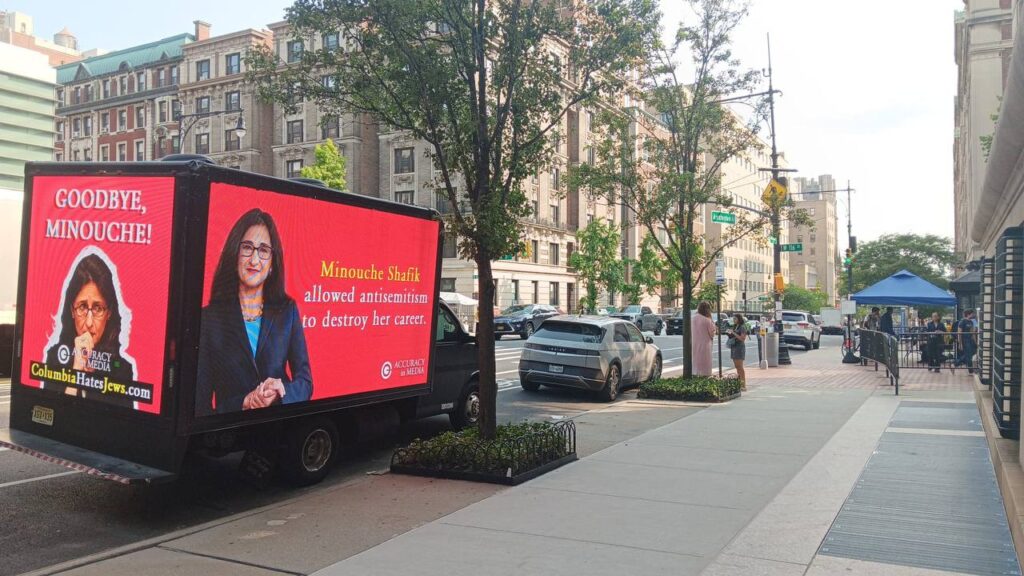
Doxxing, or publishing someone’s personal information to intimidate or harass them, has become an increasingly common tactic on campus following protests over the war in Gaza. Conservative media group Accuracy in Media has displayed students’ names on trucks with digital billboards around campus since the start of the protests. In response to the prevalence of doxxing, the University adopted an anti-doxxing policy on March 12.