Columbia Spectator Opinion Reacts to AIM’s Columbia Accountability Campaign
April 14, 2026
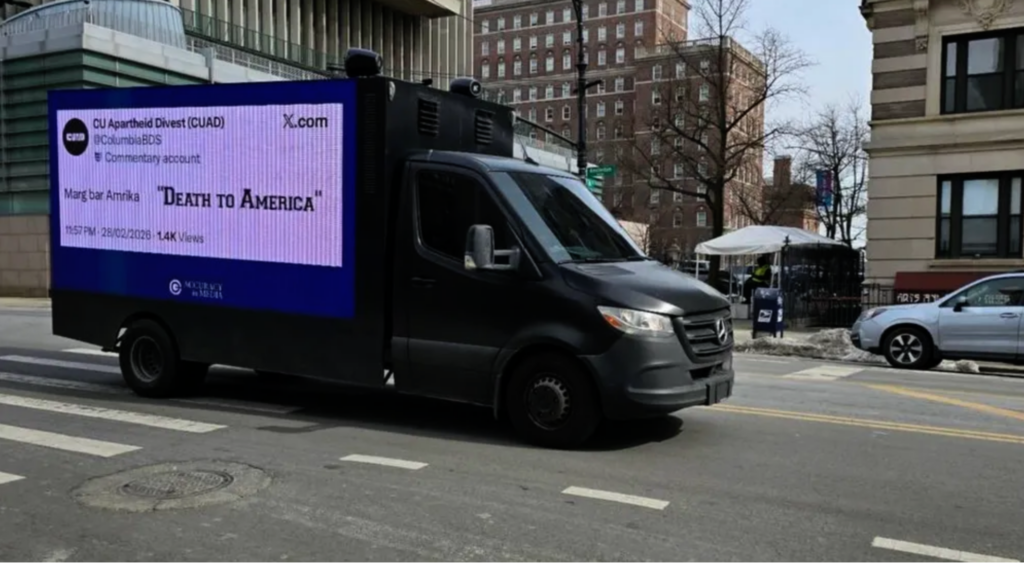
Accuracy in Media—a conservative nonprofit with a history of doxxing student activists at universities across the country—returned to Broadway on March 2 displaying the names of over 50 students on a truck screen that identified said students as alleged “leaders” of CU Apartheid Divest. The truck screen also featured a QR code inviting the public to report “bad actors” on college campuses.
Doxxing attacks, which the National Association of Attorneys General defines as “the malicious exposure of personal identifying information” to incite harm or intimidate individuals, have become a novel form of digital vigilantism on and around our campus. Doxxing can take the form of physical billboards listing names, digital databases like Canary Mission, or the public distribution of private home addresses and employment records. While the attacks are often intended to provoke direct retribution against an individual, online doxxing can result in expansive, prolonged harm due to the indelible nature of the digital footprint, making it almost impossible to scrub private information from the internet once it is posted.
In the past several years, doxxing has been at the center of many high-stakes conversations on campus, with students’ names displayed on both physical trucks and digital boards publicly shaming them for purported affiliations or actions. Just recently, University Senator Helen Han Wei Luo was doxxed, exposing her to racist emails and threats of violence that persisted for 19 months.
Since these events, the University has adopted an anti-doxxing and harassment policy for addressing future incidents. In response to the return of the doxxing trucks this past month, Columbia restated that it would “use the processes in place to examine any policy violations, respecting due process, facts, and evidence.”