DEI loophole on display at Ohio’s Bowling Green State University
April 28, 2026
Universities in Ohio haven’t dropped Diversity, Equity, and Inclusion (DEI), even after the state passed a law directing them to do so.
This appears to be the case at Bowling Green State University (BGSU), where one administrator admitted to very few changes to course material aside from changing class names.
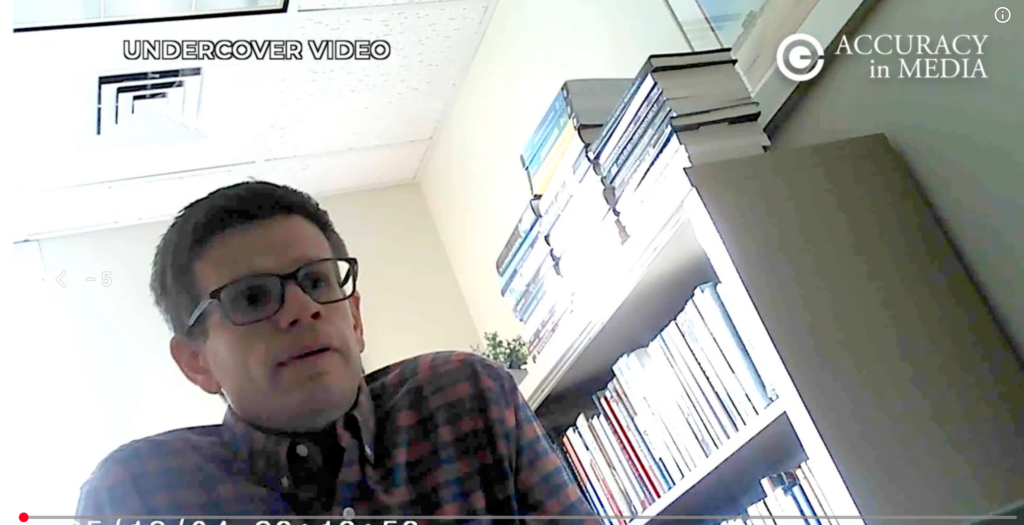
“While we have been impacted to an extent by some of the political dynamics at the state level, I think the impact has been relatively minimal,” BGSU Department of Human Services Chair and Professor Adam Watkins said on Accuracy in Media’s hidden camera.
He explained to AIM’s undercover investigator how the social work program manages to get around state and federal DEI policies.
“They have had to rename a few courses to align with certain expectations set by the state. However, the social work program does have an accrediting body specific to their discipline that requires, in order for them to maintain accreditation, that they still include components in the curriculum that align with some of the things that you just mentioned,” Watkins said.
AIM’s investigative journalist had asked about the presence of DEI and intersectionality in the BGSU program, as compared with a program in a Democratically run state such as New York.
The difference in locale actually could make BGSU more focused on “inclusivity,” Watkins suggested.
He explained that due to the school’s location, being in Ohio, and its “more homogenous student group” the program may “place more emphasis” on DEI to prepare students for environments they haven’t been exposed to.
Ohio Gov. Mike DeWine signed a law banning many DEI efforts on college campuses. While this measure barred many of the avenues universities use to inject DEI into daily life, administrators have a loophole to ensure it remains a part of social work programs.
Programs across the country, including in Ohio, are pointing to the Council on Social Work Education and its criteria requiring DEI for degree program accreditation.
As Watkins and others have alluded to, these programs are able to keep promoting DEI and fall back on CSWE’s accreditation standards.
But several states are taking matters into their own hands. Florida, Georgia, Texas, South Carolina, North Carolina, and Tennessee, have taken steps to establish their own accreditation bodies that don’t require DEI, to close this loophole.
Every state needs to follow these steps to make sure taxpayers aren’t beholden to the accreditation standards of the CSWE.
AIM is on the ground in states that have supposedly done away with DEI. If one thing is clear, it’s that activist administrators aren’t willing to stop prioritizing DEI–even if it means bending the rules and disguising their woke ideology from lawmakers.
We won’t let these universities pull the wool over taxpayers’ eyes as they keep DEI at the center of college education.
Visit DEIInOhio.com and send one convenient message to all the relevant trustees. Tell them these DEI efforts are against the law in Ohio and it’s time for the Buckeye State to take accreditation into its own hands.