Campus Reform Highlights Iowa Regents’ Review of DEI and CRT Course Content
July 1, 2026
Iowa Board of Regents orders review of DEI, CRT content in degree-required courses
Eli Stephens ’28 | California Investigator
July 1, 2026, 10:15 am ET
The Iowa Board of Regents approved a policy revision on June 16 requiring state universities to review undergraduate general education courses for substantial Diversity, Equity, and Inclusion (DEI) or Critical Race Theory (CRT) content.
The measure passed in a 5–3 vote through the board’s Governance, Evaluation and Human Resources Committee and establishes a new oversight process for courses that satisfy general education requirements. The review will begin during the 2026–27 academic year and will occur every two years as part of broader academic program evaluations.
Under the policy, Regents staff and university officials will examine undergraduate general education offerings and identify courses containing substantial DEI or CRT content. Board materials state that courses under review should present “the range of scholarly views and ongoing debate in the field.”
The policy follows Iowa’s enactment of Senate File 2435 in 2024, which restricted DEI activities at the state’s public universities. The law limited DEI offices, staffing positions, and mandatory diversity statements.
Following implementation of the law, Iowa’s public universities redirected more than $2.1 million previously allocated to DEI-related offices and positions.
Board documents state that the policy itself carries no direct fiscal impact. However, officials estimate implementation will require more than 1,000 staff hours across the Board Office and Iowa’s public universities.
The proposal expands a broader academic review framework adopted by the regents in 2025.
During discussion of the measure, Board President Robert Cramer said the review is intended to evaluate existing coursework rather than eliminate classes or impose new graduation requirements.
“We think the vast majority of our faculty are presenting [coursework] in a fair and professional manner—describing what these things are, but not pushing an agenda one way or the other,” Cramer said.
University employees tell a very different story.
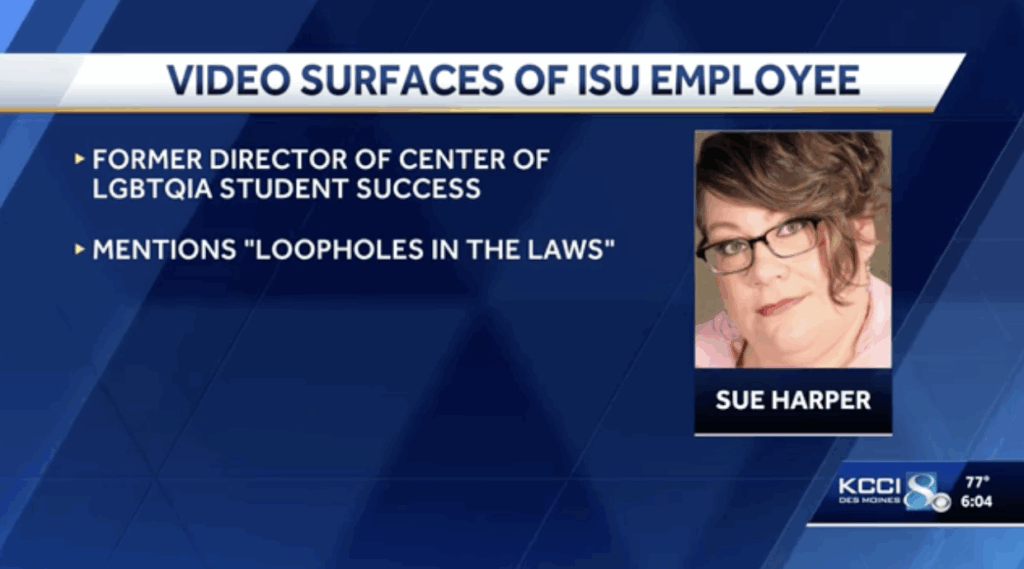
Accuracy in Media has reported on whether DEI-related programming has persisted at Iowa universities despite the state’s restrictions. The organization recently published undercover videos at the University of Iowa and Iowa State University, which show officials discussing efforts to continue DEI work after the ban.
Accuracy in Media President Adam Guillette told Campus Reform that DEI advocates “will not stop until there are strict laws in place with serious legal consequences for those who violate it.”
”Every state must enact a Florida-style DEI ban and include both a reporting mechanism and actual penalties for breaking the law,” he added.