Therapy as Activism: APA 2025 Conference Exposes Push to Reengineer “White Allies” and “Redistribute Power”
July 27, 2026
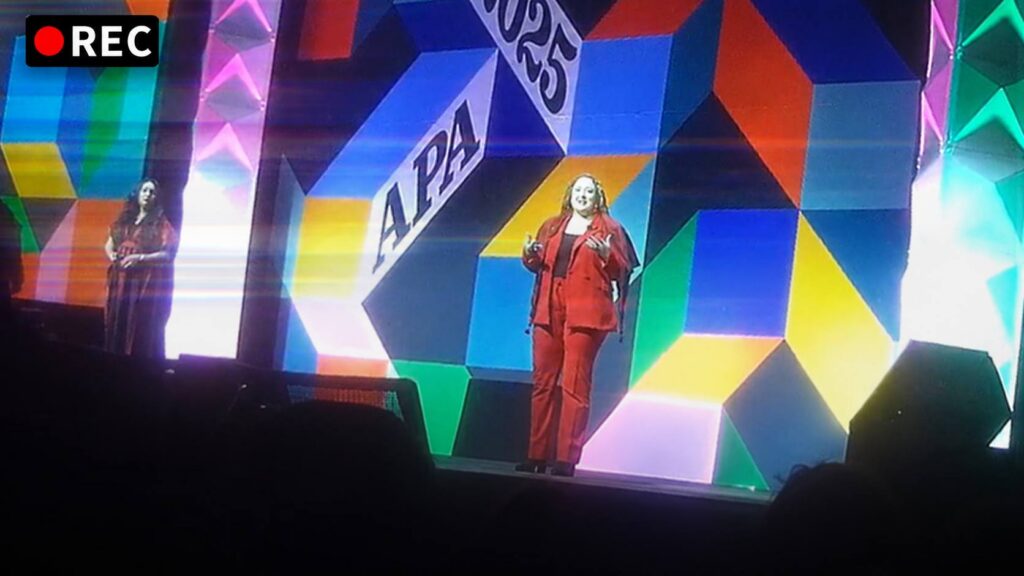
At the 2025 conference of the American Psychological Association, what was billed as a gathering of the nation’s top mental health professionals turned into something else entirely: a platform for political activism dressed up in clinical language.
An Accuracy in Media journalist captured two professors openly promoting the use of therapy techniques—not to treat patients—but to advance what they describe as an “antiracism movement,” complete with calls to “redistribute power” across society.
During her remarks, Natalie Watson-Singleton, an associate professor at Spelman College, framed opposition to Diversity, Equity, and Inclusion (DEI) programs not as policy disagreement—but as repression.
“These anti-DEI policies have also set the stage for increased censorship and punitive action… especially for those of us who decide to speak out against the racism for Palestinians and genocide in Gaza.”
She went further, arguing that even the language of civil rights is being “weaponized”:
“We’ve even seen the language of antisemitism… taken and weaponized to… maintain racism, colonialism and widespread oppression.”
But Watson-Singleton made clear this wasn’t just rhetoric—it was a call to action.
“When we are talking about antiracism… we are talking about intentional and sustained behaviors… to disrupt racism… and redistribute power individually, culturally and systematically.”
That “action” was outlined explicitly by Yara Mekawi, who described structured programs designed to reshape behavior—specifically targeting “white allies.”
“There are ways for white allies to speak up… while at the same time taking the lead of BIPOC and… staying in their lane… It’s a dialectic.”
Mekawi detailed how her team operationalizes this through psychological frameworks typically used in clinical care:
“We used skills from dialectical behavior therapy… In addition to DBT… ACT, Motivational Interviewing, CBT, and mindfulness to help white allies overcome barriers…”
These aren’t fringe techniques—they are foundational tools in modern psychology. But here, they were presented as instruments for ideological training.
She described tailoring emotional regulation strategies to what she called “group-level emotions” tied to racial identity:
“To teach white allies how to regulate the anxiety that gets activated when their white racial [identity] is brought to the forefront.”
The effort has already been formalized into a training model:
“We’ve turned all these skills into a book we call Beyond Fragility.”
The implications are hard to ignore. Techniques like Cognitive Behavioral Therapy and mindfulness have long been used to help individuals manage anxiety, trauma, and depression. At the APA conference, those same tools were framed as mechanisms to influence beliefs, behaviors, and social roles—based on race.
What emerges is a fundamental shift: from treating patients as individuals to categorizing them by identity and guiding them toward predetermined social outcomes.
The APA conference represents the institutional core of American psychology. When speakers openly advocate using clinical frameworks to “redistribute power,” it raises serious questions about where the profession is heading.
Are these methods being used to heal—or to shape ideology?
And as debates over DEI continue nationwide, one thing is clear: the battle is no longer confined to classrooms or corporate training sessions. It has entered the therapy room—armed with the full authority of modern psychology.
Take action right now by going to NoPoliticsinHealthCare.com.