AIM’s Kentucky University Investigations Featured in Kentucky Lantern Commentary
September 17, 2026
KY lawmakers censored universities, then shielded their own records
Sep 17, 2026 | 5:30 am ET | By James Orlick
What happens when politicians dislike what a professor teaches, an employee says, or a university prints?
Across 829 pages I obtained from the Kentucky Attorney General’s Office, and thousands more from Kentucky universities, I found courses altered and words, missions, programs, and philanthropic initiatives erased or renamed because of perceived ties to diversity, equity, and inclusion under the GOP-sponsored law, 2025 HB4.
I found that State Sen. Gary Boswell sent the Attorney General’s Office photographs of a book assigned in a university course, along with other course information. Identifying himself as a senator, he said that he “wanted the professor fired or worse.”
Or worse.
An elected official invoked his position while contacting the state’s chief law enforcement office about a university classroom.
What did “or worse” mean? Without public records, who would know to ask?
The surveillance began before HB 4 became law. In June 2024, Rep. Jennifer Decker directed Kentucky universities to identify by name, title, office, and salary employees connected to “Diversity,” “Equity,” “Equality,” “Inclusion,” “Inclusive,” or “DEI.” She also requested lists of courses addressing power, privilege, subordination, oppression, colonialism, and socioeconomic status, according to my open records requests from universities. Records that, if an ordinary citizen were to request, would most likely be denied at some universities due to being unreasonably burdensome.
This massive inventory created a surveillance tool for tracking spending, people, courses, and ideas.
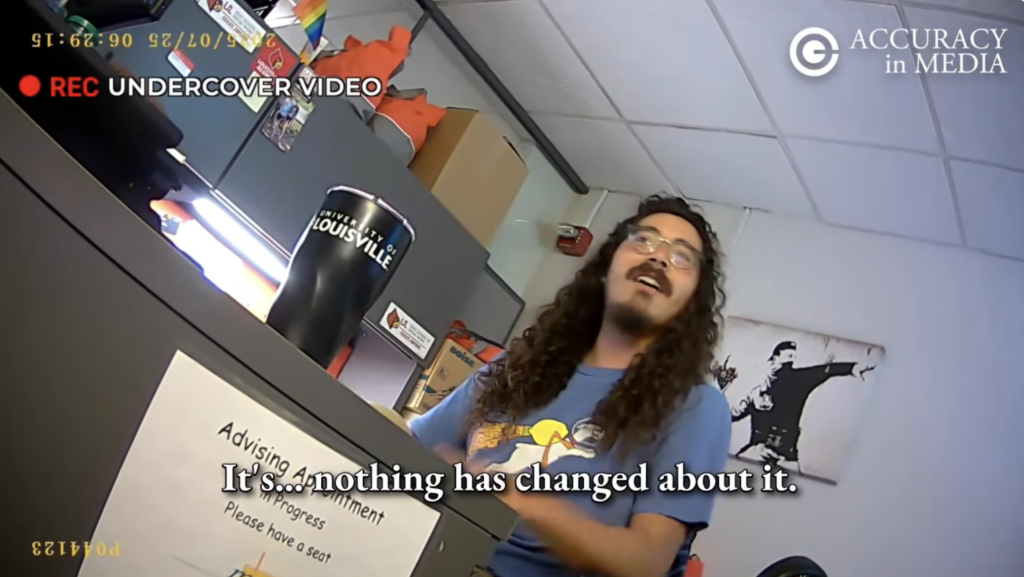
Raw footage I obtained from the Attorney General’s Office showed Accuracy in Media using deceptive undercover tactics to target university employees over DEI. An operative posed as a prospective student, secretly recorded an unsuspecting staff member, and transformed selected footage into an accusatory video.
Journalistic ethics generally reserve undercover tactics for exceptional circumstances when information vital to the public cannot reasonably be obtained through transparent reporting. What open methods did Accuracy in Media attempt?
Republican lawmakers shared the video and accused the University of Kentucky of violating HB 4, even though the law expressly exempts course content and instruction. Rep. Shane Baker confronted UK President Eli Capilouto about it during a hearing on the university’s budget request. Rep. Baker asked, “If a university is found to be in violation of that law, should that university continue to receive taxpayer funds?”
The Attorney General’s Office also said it was reviewing the matter.
The sequence is chilling: An employee is deceived and recorded. Lawmakers amplify selected footage, carry it into budget deliberations, and raise the prospect of withholding public funds before any violation is established.
It continued. In a Feb. 5, 2026 email I obtained, Rep. T.J. Roberts introduced Accuracy in Media to Rep. Jennifer Decker and the Attorney General’s Office, saying legislators were interested in its investigation. Rep. Decker called Accuracy in Media “advocates,” warning that overreach could undermine credibility when seeking enforcement against what she considered “true noncompliance,” and provided guidance on what she would welcome receiving in surveillance videos.
Were Rep. Decker’s inventories, or the names and courses collected through them, shared with Accuracy in Media or another outside organization? Were private activists serving as political watchdogs?
That is why the public needs lawmakers’ communications.